The Realities of Living at Anchor | Solving Everyday Boat Problems
Muddy anchor chain, no dock water, and mosquitoes at dusk. Here's how we solved three everyday problems at anchor in Annapolis.
Anchored in Spa Creek, Annapolis, three small problems stacked up in one week — mud on the anchor chain, no easy way to refill the water tanks, and an evening invasion of mosquitoes. None of them are dramatic. All of them are the actual texture of living aboard full-time.
This episode is about solving each one with what's on hand, a little improvisation, and in one case, a crash course in sewing.
Shawn and Geri solve everyday liveaboard problems at anchor in Spa Creek, Annapolis, including washdown, water refilling, and mosquito screens.
What Happened
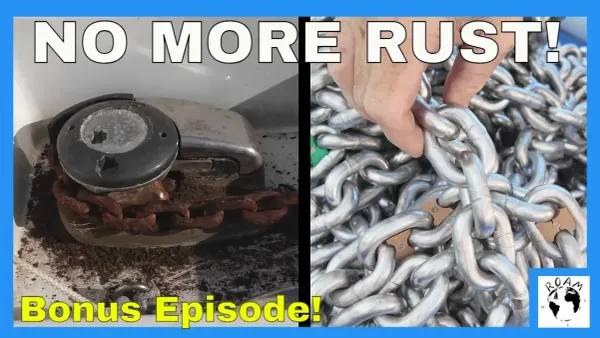
Chesapeake mud is notorious, and without a permanent raw water washdown pump installed yet (one more item on the refit list), cleaning caked mud off the anchor chain with fresh water wasn't an option worth considering. The workaround: a submersible sump pump lowered on a rope, run off inverter power, hosing the chain and windlass clean as the anchor came up. Not elegant, but effective, and a placeholder until the proper washdown system gets built.
Refilling the water tanks in the Chesapeake meant avoiding the watermaker entirely — the water is too silty and would clog pre-filters fast enough to make it impractical. Moving the boat to a dock for water meant giving up a hard-to-get anchorage in Spa Creek with room for only one boat our size. Instead, a 100-gallon portable bladder rides in the dinghy to a public dock in Annapolis, filled with permission from the harbor master, then brought back and pumped into the tanks through a shallow well jet pump. One round trip brought one tank back to 46 gallons and filled the other side — enough to make the process worth repeating rather than relocating the boat.
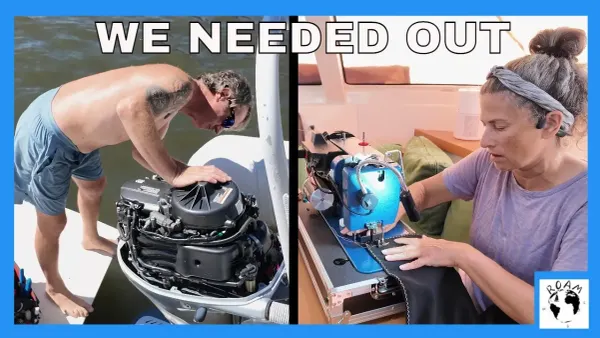
The mosquito problem showed up fast once the wind died down in the calm, wake-free anchorage. The fix: custom-sewn mosquito screens for the salon hatches, built from spring steel wire and mesh netting, using sewing skills picked up months earlier during a cold stretch in the Virginia boatyard. Standard hatch screen patterns assume square corners; these hatches have curved ones, which meant designing the pattern from scratch. The first two screens came out serviceable, not polished — visible gaps in the corners, imperfect stitching that gets hidden under binding tape later but, they mostly keep the mosquitos out!
Why It Matters
Anchoring in a city with a strong harbor master system has real advantages. Annapolis requires pump-out receipts, check-ins, and anchorage requests, which keeps the anchorage functional and avoids the derelict-boat problems that plague less regulated harbors. Being a known, well-behaved boat in that system paid off directly — the harbor master pointed us to the water dock and remembers us on return visits.
Solving water logistics without relocating the boat protects a scarce resource. A good anchorage with room for a 54-foot catamaran is not easy to find or get back once given up. Spending the extra money on a bladder and pump is a small cost compared to losing an anchorage we plan to use for a couple months.
Improvised solutions are a normal and legitimate part of cruising, not a failure to plan ahead. The washdown pump, the water bladder, and the mosquito screens are all temporary fixes standing in for systems that will eventually be built properly. None of them need to be perfect to be worth doing now. The key is to document the the long-term need and follow through on completing the properly built solution.
Skills picked up during downtime pay off later, often in ways that weren't the original plan. Learning to sew during a cold winter stretch when boatyard work wasn't possible turned into the exact skill needed to solve a completely unrelated problem months later at anchor.
Related Episodes
The sewing skills used for the mosquito screens were first picked up during the cold snap documented in EP65.
What Comes Next
The permanent raw water washdown pump is still on the project list, along with covers for the remaining hatches and the salon door. Life at anchor in Spa Creek continues, with the water bladder run and mosquito screens are both proving useful enough to repeat as needed while bigger projects — the autopilot, air conditioning, and the water maker — wait their turn.