Sub-Freezing Refit Life | Boat Work When Winter Hits Hard Ep. 65 #refit
Sub-zero temperatures hit the refit. Shawn heated small spaces to keep working. Geri stayed warm and recharged. Different strategies, same goal.
A two-week cold snap hit Virginia in mid-February. Sub-zero temperatures, snow, ice — conditions that don't just slow boat work down, they stop it entirely. But with no time to hibernate for two weeks, the strategy had to shift. Heat small spaces. Work where heat can actually hold. Make progress where possible. Take breaks where necessary.
This episode is about adapting when the weather doesn't cooperate, and recognizing that sometimes the smartest move is to step back.
📺 Watch Episode 65 👉
A two-week sub-zero cold snap forces a change in tactics. Shawn heats small spaces to keep working. Geri stays warm and learns to sew mosquito screens.
What Happened
Shawn worked inside the boat in spaces small enough to heat with two portable heaters — a parabolic dish heater and an oil radiator. The AC electrical panels were installed and finished. The fuel polisher system was fully assembled and mounted. The fresh water system was connected through to the pressure tanks and is now ready for pressure testing. Bilge and shower pumps were mounted. Toilet controls were wired. Coolant hoses were routed from the engines to the water heaters.
Each project required choosing a workspace that could stay warm enough to function — the bilge, the head compartments, the engine rooms. Frozen hoses and wires don't bend. Fingers don't work below a certain temperature. The work had to be deliberate and small-scale.
Geri stayed at the apartment. She read, baked bread and cookies, napped, and started learning to sew on a machine she'd never touched before. The goal: mosquito and no-see-um screens for the hatches. None of the commercial options available work with curved flange corners, so she's figuring it out from scratch.
Why It Matters
Working in extreme cold isn't about toughness — it's about strategy. Trying to heat an entire uninsulated catamaran when it's -6°F outside is a losing game. The approach that worked was isolating small spaces, closing off sections, and focusing heat where the actual work was happening. That kept progress moving when the alternative was shutting down entirely.
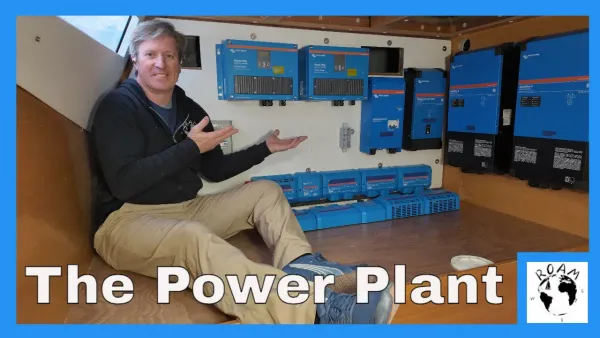
The AC electrical distribution is now complete. Three panels — galley, starboard hull, port hull — with enough capacity to run the induction cooktop, oven, dishwasher, and any number of plug-in appliances simultaneously without tripping breakers. The boat now has 100-amp service running through a main distribution panel, all wired with GFCI breakers where appropriate, cable glands, and gasketed waterproof enclosures. Metal wire cable trays were used for cable management throughout — they breathe better than enclosed plastic trays, which helps with heat dissipation, though they'll need monitoring for rust in a marine environment.
The fuel polisher is mounted and ready to be wired up. It's a custom-built system — pump, three valves, water separator fuel filter — designed to move fuel between tanks and polish it in the process. The electric valves can eventually be upgraded with automation tied to the water sensor, allowing automatic drainage. There's also a jerry can inlet for polishing questionable fuel before it goes into the tanks. The entire assembly was built in the galley and mounted as one unit with six bolts.
The fresh water system is ready for pressure testing. Two large pressure tanks — one in each hull — provide smooth, even pressure throughout the boat and significantly reduce how often the pumps have to cycle. Coolant lines from the engines run through heat exchangers in the water heaters, which means bonus 180°F hot water whenever the engines are running.
Mental health recovery isn't optional. Geri made the call to stay warm, rest, and recharge instead of enduring conditions she knew she couldn't sustain. That choice kept her functional for what comes next, which matters more than forcing through two weeks of misery for marginal progress.
Tools / Products Used
Whale Gulper IC Pumps (Mentioned, no relationship) Used for bilge and shower pumps. Intelligent circuit with integrated sensors. Don't clog, don't require frequent cleaning.
Deutsch Connectors (Mentioned, no relationship) Watertight electrical connectors used throughout the installation, including toilet controller wiring.
Pressure Tanks (Mentioned, no relationship) Two large tanks installed — one per hull — to stabilize water pressure and reduce pump cycling.
No affiliate links or partner relationships to disclose in this episode.
Related Episodes
The AC electrical system work builds on the power wall installation covered in EP62.
The fuel polisher references earlier fuel system design work. Engine coolant routing ties into the ongoing engine maintenance series — EP40, EP41, and EP43.
What Comes Next
The cold snap broke. Mid-February sun and the sound of buffers in the boatyard signal that work is picking back up across the yard. Spring isn't here yet, but it's close enough to feel possible. With the water system ready for pressure testing and electrical systems wired, the next phase is bringing systems online and testing under load.