Moving Back on Board
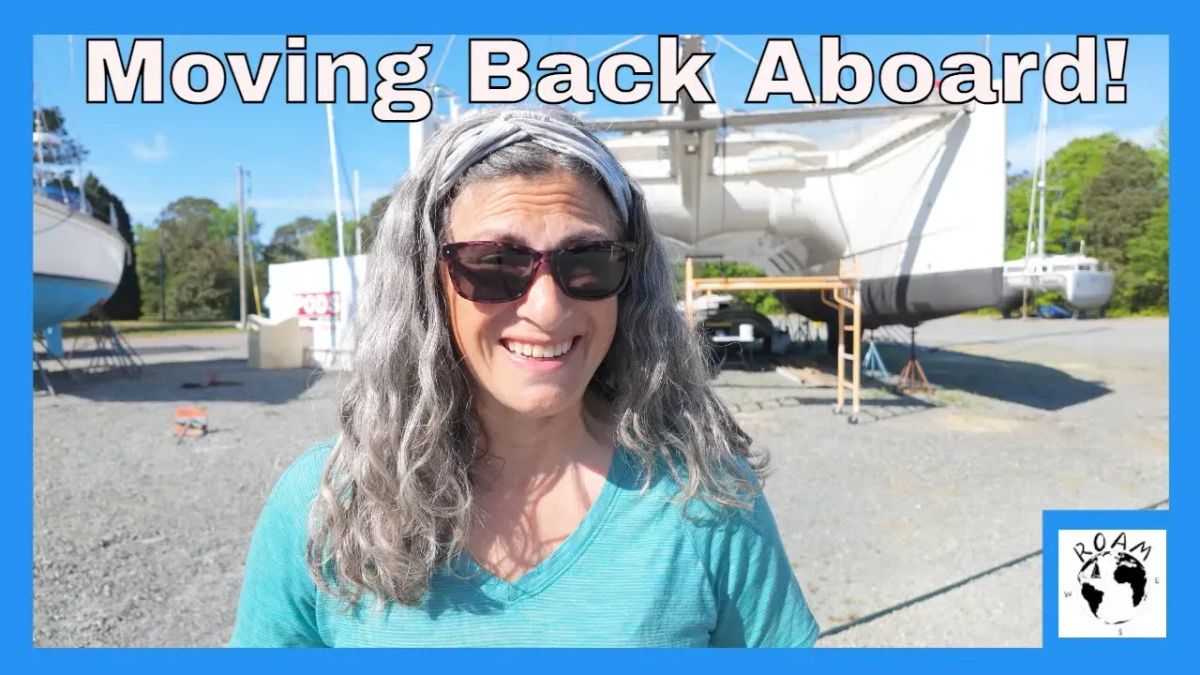
After two years, the drawers went back in. Then we made the call: move back aboard even though the boat wasn't finished. No water, no power, no comfort. Just progress.
The drawers came out of storage after nearly two years. Each one had a photo taped to it showing exactly where it belonged — a decision made back when everything was being pulled out of the boat that turned out to be far more useful than expected. The boat had been sitting on the hard long enough that we didn't remember which drawer went where. The photos solved that immediately.
Putting drawers back in was the visible signal that the refit had crossed a line. Teardown was over. Reassembly had started. But the bigger decision came next: move back onto the boat full-time, even though it wasn't finished. No running water. No permanent power. A three-minute walk across the yard to use the bathroom, shower, or wash dishes. It wasn't comfortable. It was the right call anyway.
The daily 25-minute commute from the Airbnb was eating time and energy. Being on the boat meant working longer, staying focused, and closing the gap to launch faster.
Shawn and Geri move back aboard their catamaran during the final phase of their refit, living without running water or permanent power.
What Happened
One room became habitable first: the aft stateroom on the port hull. Drawers went back in. Panels were reinstalled with an outlet and a light switch on Geri's side of the bed — neither functional yet, but in place so the panels could go up. The space was cleaned with Concrobium to kill mold spores. The bed was cleared of pumps, strainers, and hoses that had been using it for storage. A mattress went down. Clothes had somewhere to go.
The galley came next. The workshop that had taken over the salon and galley for months was moved out to the cockpit. Tools lived outside now. The sink, dishwasher, and induction cooktop were exposed again — decorative for now since there's no water or gray tank, and running wastewater into the yard isn't acceptable. The functional galley runs on extension cords: a small oven, a single induction element, a toaster, an electric kettle, and a small microwave. It's adequate.
The yard bathroom became the central service point for everything the boat couldn't handle yet. Showers. Toilets. Dishes. Hand washing. The walk took about three minutes each way. Geri made it 20 times a day or more. Forgetting a towel meant walking back or doing without.
Three weeks in, the reality settled. Being on the boat was great. Being in the yard was hard. There is nowhere to sit except on gardening knee cushions on the floor. There is no running water to wash hands. The lack of a commute helped productivity, but being on site all the time made it harder to stay focused without a daily plan.
The mental shift was bigger than the physical one. The refit strategy changed from "everything done perfectly before launch" to MVP — minimum viable product. Some projects would wait until after the boat was back in the water. That was fine. Boat projects never end anyway. The goal now was getting to May 15th. Twenty-seven working days left to splash.
Why It Matters
Eliminating the commute gave back hours. The round trip was 50 minutes a day, plus transition time at both ends. That's an hour or more of usable work time every single day. Over the course of 27 working days, that's nearly 30 hours — almost a full week of productivity reclaimed.
The shift to MVP thinking was necessary. Grandiose plans made sense at the beginning of the refit when time felt infinite. Two years later, with a splash date locked in, perfection became the enemy of progress. Getting systems functional enough to launch mattered more than getting them exactly right before leaving the yard.
Being uncomfortable accelerates decision-making. Living in a space that's missing basic amenities creates urgency around finishing the things that make the space livable. No running water means prioritizing the fresh water system. No place to sit means finishing interior spaces faster. Discomfort is a forcing function.
The drawers coming back in mattered psychologically as much as practically. For nearly two years, the boat looked like a construction site. Putting drawers back signaled that the boat was becoming a boat again, not just a project. That shift in how the space felt changed how the work felt.
Tools / Products Used
Concrobium Mold Control (Mentioned, no relationship)
Used to clean and kill mold spores in the stateroom before moving back aboard.
No affiliate links or partner relationships to disclose in this episode.
Related Episodes
The decision to shift to MVP thinking ties back to the timeline pressure building throughout the refit. The mast stepping in EP68 was a major milestone that made launch feel real and close.
What Comes Next
May 15th. Twenty-seven working days. The fresh water system needs to finish. The DC power system is still in progress. Batteries are almost done. The head compartments aren't functional yet, but the yard bathroom works well enough for now. Every system that can wait until after launch will wait. Everything else gets prioritized ruthlessly.
Living on the boat while finishing the boat isn't comfortable, but it's working. The momentum is real now.