Installing New LED Lights on Our Sailboat | Wiring & Hole Cutting
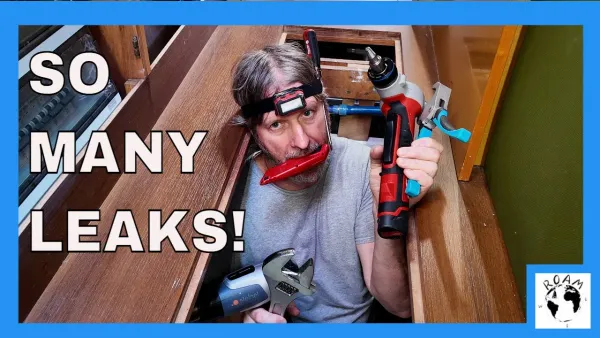
New LED lights required enlarged holes, custom wire harnesses, and a lot of fishing wires through tight spaces. Then the real test: polarity.
The galley lighting was the next system to go in. Sixteen LED lights in the central overhead panels, plus perimeter and cockpit fixtures — all standardized to a single model so spares stay simple. The lights were nearly perfect: IP rating, brightness, voltage, current draw all matched the spec. The only problem was the diameter. They were slightly larger than advertised, which meant every hole that had been cut for the original fixtures now had to be enlarged.
What started as a straightforward lighting install turned into hole cutting, wire harness building, and a lot of time spent fishing cables through tight spaces overhead.
📺 Watch Episode 67 👉
Stainless panels come down, holes get enlarged, wires get fished, and lights go in. Then the moment of truth: will they actually work?
What Happened
Two stainless steel panels in the galley came down first — each one holding eight light fixtures. A Vevor knock-out tool was used to enlarge the holes. It's a hydraulic two-part tool that pulls a cutting die through the material cleanly. The holes were positioned carefully toward the outside edges to keep the trim rings from overlapping when the lights went in.
With the holes cut, wire harnesses were built for all sixteen central lights. Each light got individual terminations, then the harnesses were assembled to tie them all together. That took the better part of a day — a lot of crimping, a lot of heat shrink, a lot of standing at the counter working through the process methodically.
The stainless panels were glued back up with the enlarged holes. Then the process moved to the overhead cabinets and perimeter lights, where existing holes had to be widened with a hole saw. The challenge there was centering a hole saw over an existing opening with nothing to guide it. The solution was nesting a smaller hole saw inside the larger one to act as a guide, then running it freehand while catching the dust.
Fishing wires through the perimeter ceiling was the most time-consuming part. Tight spaces, limited access, and stubborn wire runs meant using fish tape, a grabber tool, and patience to get everything routed properly. The cockpit lights required the same treatment.
Once the wiring was complete and the lights were installed, it was time to test. Shawn connected power without pre-testing first — confident enough to just go for it. Nothing happened. The issue: polarity was reversed. LEDs care which wire is which. Once corrected, the lights came on bright and dimmable, exactly as intended.
Why It Matters
Standardizing to a single light model simplifies spares and maintenance. The boat now carries one type of LED fixture throughout, which means keeping a couple of spares on hand covers every light that could fail. Different sizes and models might save a few dollars up front, but the long-term cost is carrying more inventory and dealing with compatibility when something breaks offshore.
The Vevor knock-out tool made clean work of a job that would have been difficult otherwise. Enlarging holes in stainless steel without deforming the material or creating rough edges is tricky. The hydraulic punch handled it cleanly and quickly. It's a Chinese-made tool — inexpensive, not built to last forever, but priced accordingly and effective for the job at hand.
Getting polarity right on LED fixtures matters. Unlike incandescent bulbs, LEDs won't work if positive and negative are swapped. They just sit there doing nothing. It's an easy mistake to make when building harnesses from scratch, and the only way to catch it is testing before everything is buttoned up.
The tedious work of fishing wires and enlarging holes is what makes systems reliable. Skipping the detail work or accepting "close enough" on fit and finish creates problems later. Clean wire runs, properly sized openings, and methodical harness building mean the system works the first time and stays working.
Tools / Products Used
Vevor Hydraulic Knock-Out Tool (Mentioned, no relationship)
Hydraulic two-part hole punch used to enlarge stainless steel light fixture holes cleanly.
LED Lights (Imported directly from manufacturer in China, no relationship)
Standardized dimmable LED fixtures used throughout the boat. Landed cost approximately $16–17 per light.
No affiliate links or partner relationships to disclose in this episode.
What Comes Next
With the lights installed and tested, the next phase is bringing the interior back together. Ceiling panels start going back in. Doors and drawers come out of storage. The boat starts looking less like a construction site and more like a space people could actually live in. After months of teardown, that's a meaningful shift.